
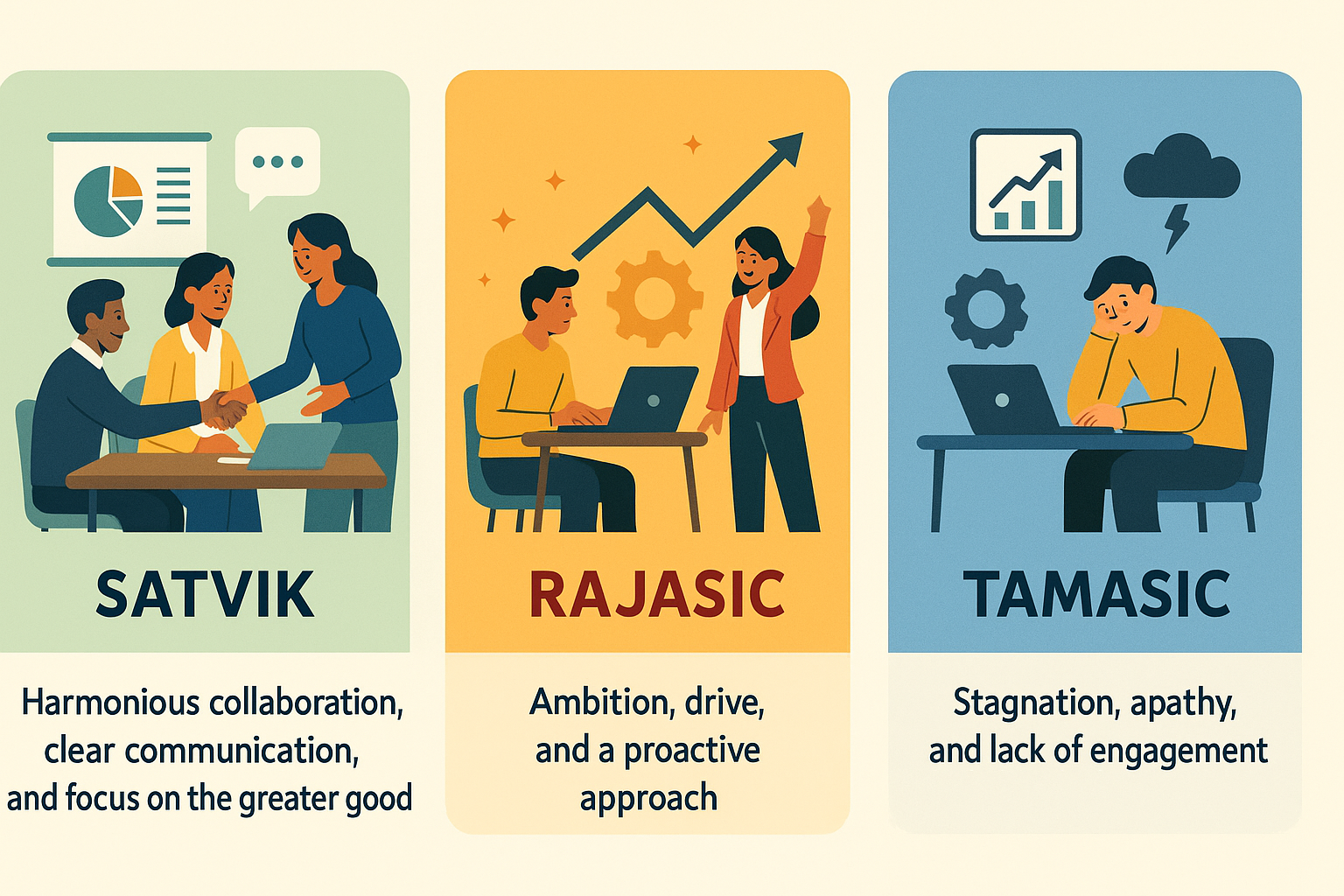
Every organization is shaped by the behaviors and mindsets of its people. These behaviors can often be categorized into three fundamental types, drawn from ancient wisdom yet highly relevant to modern workplaces: Satvik, Rajasic, and Tamasic. Understanding these categories provides valuable insights into team dynamics, leadership styles, and organizational culture. By recognizing the nature of these activities, leaders and employees alike can foster a more balanced, productive, and harmonious work environment.
Satvik activities involve harmonious collaboration, clear communication, and focus on the greater good, promoting a peaceful and productive environment.
Rajasic activities are characterized by ambition, drive, and a proactive approach, potentially leading to competitiveness or overwork.
Tamasic activities involve stagnation, apathy, and a lack of engagement, potentially hindering progress and creating a negative atmosphere.
Satvik Activities:
- Clear Communication: Open and honest communication channels that foster understanding and collaboration.
- Harmonious Collaboration: Teamwork that emphasizes cooperation, mutual respect, and shared goals.
- Focus on the Greater Good: Prioritizing the overall success and well-being of the organization over individual gains.
- Positive and Peaceful Environment: Creating a workplace that is conducive to mental clarity, calmness, and productivity.
- Mindfulness and Awareness: Engaging in practices that promote self-awareness, emotional regulation, and mindful decision-making.
Rajasic Activities:
- Driven by Ambition: Demonstrating strong ambition and a proactive approach to work, potentially leading to competitiveness.
- Focus on Results: Prioritizing achieving goals and meeting deadlines, potentially leading to a high-pressure environment.
- Proactive Engagement: Actively participating in problem-solving and decision-making, potentially leading to rapid progress but also potential for conflict.
- Overwork and Stress: Working excessively and experiencing high levels of stress, potentially impacting well-being and relationships.
- Competition and Rivalry: Engaging in competition with colleagues, potentially creating a challenging or hostile work environment.
Tamasic Activities:
- Stagnation and Lack of Engagement: Demonstrating apathy, laziness, and a lack of enthusiasm for work.
- Resistance to Change: Rejecting new ideas and initiatives, potentially hindering innovation and progress.
- Negative Attitude: Exhibiting a pessimistic and negative attitude towards work and colleagues, potentially creating a toxic environment.
- Lack of Responsibility: Avoiding responsibility and tasks, potentially leading to a lack of accountability and poor performance.
- Social Isolation: Withdrawing from social interactions and team activities, potentially creating a sense of isolation and disconnection.