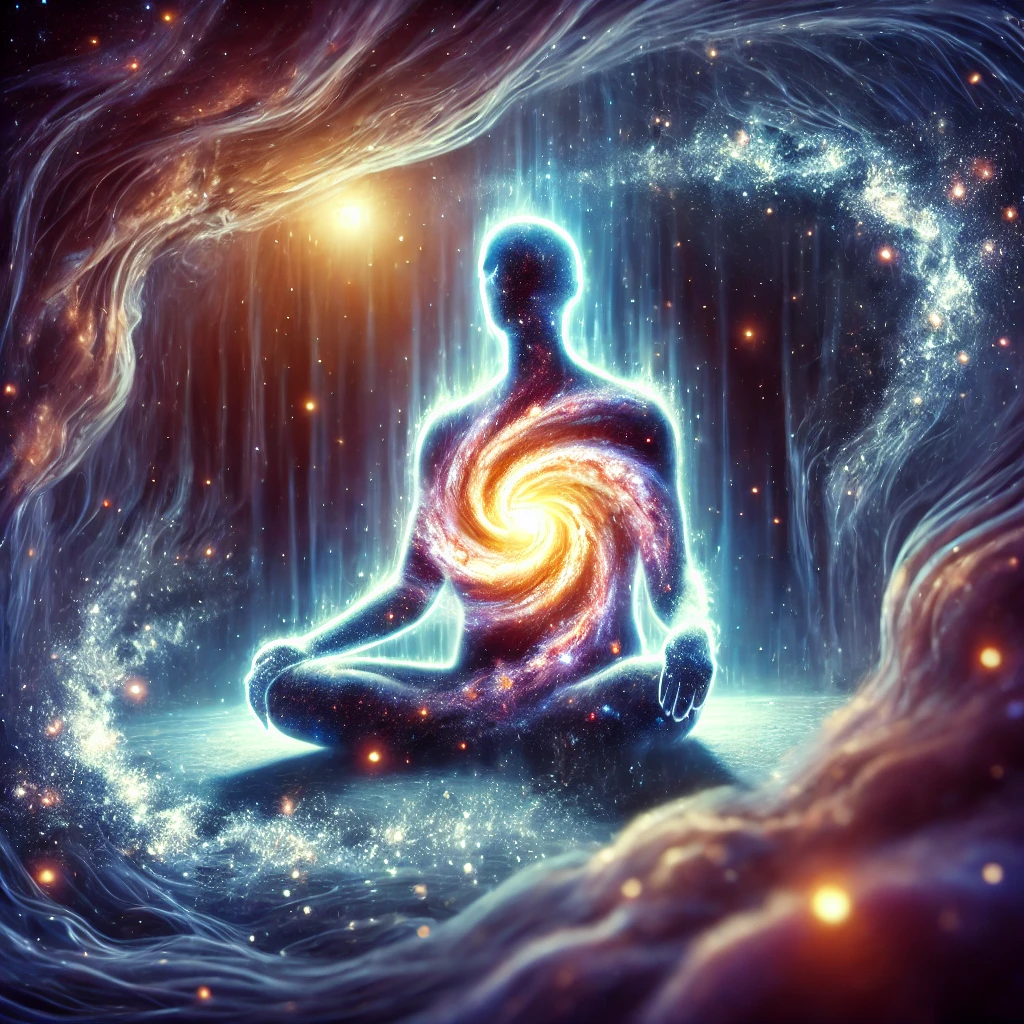

Chitta is a form of consciousness (or vibration/energy) also known as the subconscious mind. It holds the level of liveliness, which constantly changes. This energy fluctuates between the states of deep sleep and full awareness. While the mind stops working during sleep, chitta continues to manifest in the form of dreams. In deep sleep, even chitta rests. When fully awake, we feel enthusiastic.
We generally exist in one of three states: Awake, Dream, or Sleep.
- Awake (Jagrut) – Being aware of what is happening in the present moment.
- Dream (Swapna) – Imagining things that are not actually happening. Dreams can arise from unfulfilled desires, stress, past memories, future plans, intuition, or even random thoughts. Since there is no proof of dreams except our own memory of them, their reality is limited. What happened in the past is no longer real, and what will happen in the future will eventually become the past. For an awakened person, reality itself is like a dream, while for an ignorant person, dreams may seem real.
- Sleep (Sushupti) – A state of deep rest where all awareness vanishes except for the soul within the body. In this state, we are completely unaware of the world. Sleep is essential for recharging the mind and body, and we spend nearly one-third of our lives sleeping.
- Turya State – A state beyond these three, occurring when we are about to sleep but not yet asleep. In this state, time feels as if it has stopped, and the body is in complete relaxation while the mind is inactive. This state can also be experienced during meditation and prolonged meditation, leading to Samadhi—a deep sleep-like state with full awareness. When Samadhi is fully achieved, even biological activities may cease.
Influence on Awareness
In the awake state, our level of awareness fluctuates based on time, place, diet, planetary vibrations, companionship, fortune, and other factors. In a fully aware state, chitta is influenced by three fundamental qualities (Gunas):
- Sattva – Purity, goodness, harmony (Chitta is inherently born of Sattva Guna).
- Rajas – Passion, activity, restlessness.
- Tamas – Darkness, inertia, chaos.
All three Gunas exist in everyone and everything, but in different proportions.
- When Sattva dominates, the mind becomes steady, like a flame in a windless place. A Sattvic person can easily concentrate, meditate, and enter Samadhi.
- When Rajas dominates, a person craves power and sensory pleasures.
- When Tamas dominates, ignorance leads to harmful actions.
No quality exists in isolation—Sattva is always mixed with Rajas and Tamas. Our primary duty is to increase Sattva while controlling Rajas and Tamas. When Sattva increases, it brings lightness, joy, purity, strength, peace, and inner illumination.
Chitta in Meditation
Let us first know chitta refers to the land where our thoughts are born, formed and remain firm as sacraments(Sanskara). This mind land is of five types.
- 1. Kshipt- restless state
- 2. Vikshipt- distracted state
- 3. Mudha-confused state
- 4. Ekagra-one-pointed state
- 5. Niruddh- restrained state